No products in the cart.
Free Shipping All over India.



0


Gir Cow Ghee vs Buffalo Ghee: Which is Better For Your Health?


Published on –

5 min read

Organic Gir Cow Ghee has always been valued by the Indian families not only as a cooking material, but also as a symbol of purity. Ayurveda to modern nutrition considers this to stimulate digestion, boost immunity and add flavor to food. However, in the choice of the type of ghee people are confused by two popular brands which are Gir Cow Ghee and Buffalo Ghee.
Even though both of them are cooked with clarified butter, they can vary greatly in their nutritional value, their textures, and impacts on human health. Gir cow ghee is usually identified with the golden color, light odor and easy digestion compared to buffalo ghee which is rich in fats and thicker and dense.
In this blog, we’ll explore how Gir cow ghee compares to buffalo ghee in terms of nutrition, health benefits, and daily use, so you can decide which one truly deserves a place in your kitchen.
Key Differences: Cow Ghee vs Buffalo Ghee
Here’s a breakdown of how they differ:
Colour & Texture
- The presence of beta- carotene in cow milk usually causes cow ghee to be yellow or of a golden color.
- Buffalo ghee is white, or pale cream in color, and is thicker and firmer. This makes cow ghee appear to be lighter and the buffalo ghee seem to be richer.
Fat content, Calories & Digestibility
- The percentage of fat in buffalo milk is more than cow milk (buffalo ghee will be richer in fat).
- Cow ghee is described as “easier to digest” and more suitable for daily consumption, especially for children and the elderly.
- Cow ghee has moderate fat, while buffalo ghee has higher fat and calories.
Nutritional & Micronutrient Differences
- Cow ghee contains more beta-carotene (providing it with its colour) and therefore, it provides vitamin A.
- Buffalo ghee is also considered to be of high quality, even if it is mainly a fat product.
- When looking at the amounts of cholesterol and saturated fats: The common belief is that cow’s ghee has lower levels of cholesterol and saturated fat as compared to buffalo ghee.
Cooking & Storage Use
- Desi Gir Cow Ghee is commonly used to cook common meals, light meals, tadka, etc. It is light and can be easily digested.
- Buffalo ghee, with higher fat and denser texture, is often used in sweets, deep-frying, festive cooking, or in recipes requiring richness.
- Buffalo ghee could also last longer on the shelf (because it contains more fat and is less moist).
Read: Health Benefits of Cooking with A2 Gir Cow Ghee
Health benefits: Cow Ghee vs Buffalo Ghee?
Here’s how each one stacks up in terms of health benefits, and how to decide which is better for you.
Cow Ghee Health Benefits
- A2 Certified Ghee is better suited for daily consumption, digestion and general wellbeing. Some sources say it boosts metabolism, supports immunity, and is recommended in Ayurvedic treatments.
- Because of the lighter nature, it is good for people who managing their weight or using ghee as a regular part of their diet.
- Traditionally in Ayurveda, cow ghee is given a “sattvic” designation (promoting clarity, calm and nourishment) as opposed to heavier fats.
Buffalo Ghee Health Benefits
- Its higher fat content makes it suitable for those needing more energy or for special cooking (festive dishes, sweets) where richness is valued.
- Because of its dense texture and slower digestibility, some prefer it in winters or when they want to keep warmth/energy.
- Also useful in certain Ayurvedic or traditional contexts for building strength, though some sources caution about daily heavy use.
How to Choose: Cow Ghee vs Buffalo Ghee
When deciding between cow ghee vs buffalo ghee, here are some pointers:
- To use on a daily basis, lighter meals, children, older adults, Cow ghee would be preferred.
- When preparing festive food, desserts, energy demands are high, and muscles need to be built or may be used in winter, Buffalo ghee would be perfect.
- If you want an overall better nutrient profile, Cow ghee tends to have the edge in many metrics (lighter fat, more vitamins).
- Check quality: The quality of the ghee can only be as good as the source of the milk (desi cow, healthy buffalo), the way of processing it, and lack of adulteration.
- Mind your portions: Excess even of “good ghee” can add up calories and saturated fat.
- Personal health condition: In case you are on weight loss, cholesterol, digestive problems, use the light version (cow ghee), and seek the advice of a nutritionist in case of uncertainty.
Read: Difference Between Buffalo Ghee vs Gir Cow Ghee
Conclusion
Each type of ghee is nutritionally superior and best suited to a particular use. Gir cow ghee is more light, and easy to digest and thus, is a good substitute to consume daily. Buffalo ghee is on the other hand more fat and energy-dense, and it is generally used during winters. Gir cow ghee is recommended for improved digestion and prolonged health advantages. Nevertheless, buffalo ghee may be the appropriate choice in moderation if you want fancy taste and more calories. In any case, it is advisable that you always use pure, traditionally prepared ghee, which you have to be sure of before you can enjoy all its nutritional benefits, as well as, its distinctive taste.
 Why Ghee Is a Must-Have for Babies and Toddlers
 Why Organic Ghee Is the Ultimate Superfood for Immunity
 Ghee and Diabetes Myths: Everything You Need to Know
 Best A2 Ghee in India: A Complete Guide for Health Enthusiasts
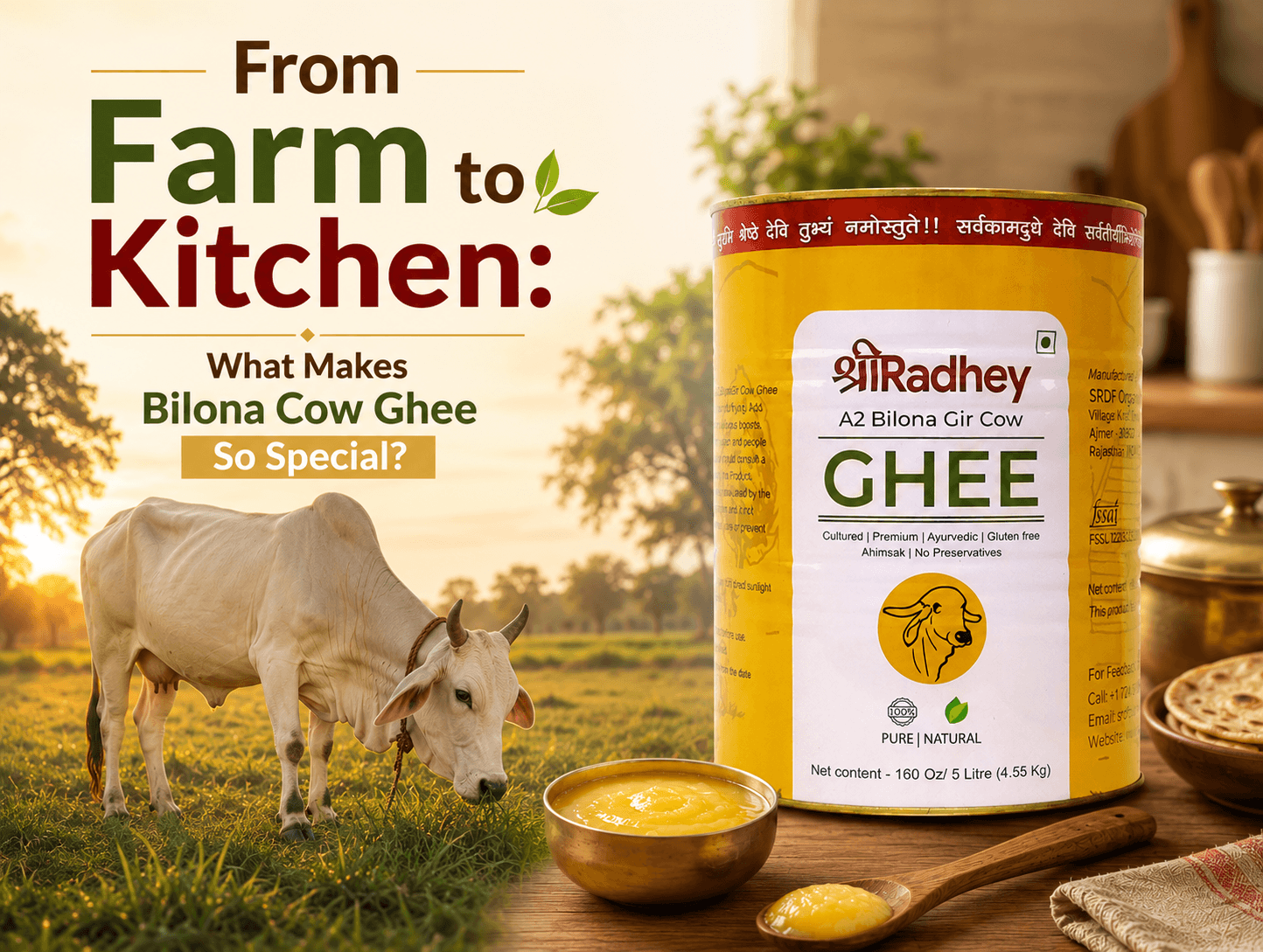 From Farm to Kitchen: What Makes Bilona Cow Ghee So Special?