No products in the cart.
Free Shipping All over India.



0


Can A2 Cow Ghee Help Reduce Inflammation?


Published on –

4 min read
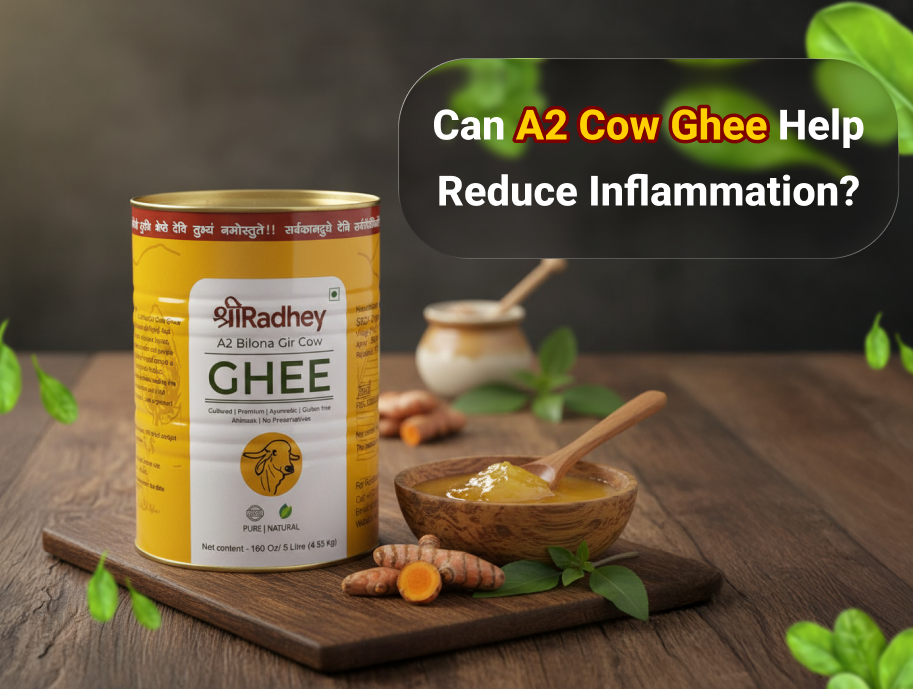
Inflammation is the body’s natural response to injury or infection, but chronic inflammation can contribute to a range of health issues, from joint pain to digestive disorders. While modern medicine offers several treatments, natural remedies have been gaining popularity for their holistic benefits. One such remedy is A2 cow ghee, a traditional Indian superfood known for its rich nutritional profile and potential anti-inflammatory properties.
In this article, we explore how A2 ghee may help reduce inflammation, why it is considered a healthier alternative to regular ghee, and how to use ghee for inflammation effectively in your daily routine.
What Is A2 Cow Ghee?
Organic A2 Desi Ghee is a clarified butter produced using the milk of cows that only synthesize the A2 type of beta-casein protein in contrast to regular milk that contains A1 and A2 type proteins. It has been found that A2 protein is simpler to digest, and could be less inflammatory than A1 protein.
Ghee for Inflammation: Understanding the Connection
Ghee has long formed part of traditional medicine such as Ayurveda where it is consumed due to its claimed anti-inflammatory effects. Contemporary studies have come out to investigate these assertions.
1. Rich in Butyrate
Butyrate (a short-chain fatty acid and anti-inflammatory), is found in A2 ghee. Butyrate is very important in keeping the gut healthy as it feeds the cells that cover the intestine and it calms down inflammation. This can be of particular benefit to those with inflammatory bowel.
2. High in Omega-3 Fatty Acids
A2 Gir Cow Ghee contains omega-3 fatty acids that are necessary fats proven to alleviate body inflammation. Intakes of foods that contain omega-3 can be used to counterbalance the body’s inflammatory reactions.
3. Contains Conjugated Linoleic Acid (CLA)
A2 ghee is also a source of a kind of fat known as CLA that has the ability to be anti-inflammatory. Some studies suppose that the CLA can help in the regulation of immune system and inflammation.
How to Use Ghee for Inflammation
It is easy to add A2 ghee to your diet. The following are some of the application of ghee in inflammation:
- Morning Detox Drink: Take teaspoonfuls of warm A2 ghee in a glass of hot water and drink it empty, without food. This will support the reduction of the gut inflammation and digestion.
- Cooking Medium: A2 ghee can be used as an alternative to normal cooking oils to saute vegetables or fry. It has a high smoke point, which makes it applicable in different cooking techniques.
- Golden Milk: Stir together A2 ghee, turmeric, and milk, and drink the beverage to potentially ease the inflammation and pain in the joint.
- Topical Application: Apply A2 ghee to inflamed tissue on the skin. It can be used in case of irritation which can be mitigated with the help of its moisturizing effect.
Read: Why Shree Radhey A2 Cow Ghee Is Better Than Other Brands
Is Ghee Good for Inflammation?
A2 Bilona Cow Ghee is also good in the anti-inflammatory effects, and it must be taken in moderation. Ghee, similar to any other type of fat, may cause weight gain and other health-related consequences, when taken in excess. It is always good to consult a health practitioner before changing your food intake, particularly in case you have health complications.
Read: Common Myths About Ghee
Conclusion
A2 cow ghee can be natural in inflammation support as it contains butyrate, omega-3 fatty acids, and conjugated linoleic acid (CLA). Ancient superfood may be incorporated into your diet, or it may be used in golden milk and even topically, thus it is a supplement to a healthy lifestyle that contributes to the prevention of chronic inflammation. Although ghee in the case of inflammation may be promising, it is important in moderation, and you should always consult a healthcare expert before making significant modifications to your diet.
Related Blogs
 How Pure Desi Ghee Helps in Acidity & Stomach Problems?
 Desi Ghee Benefits for Women: The Secret to Naturally Glowing Skin
 Why Pure Cow Ghee Is Highly Recommended For Babies?
 Benefits of A2 Ghee & Why It Is Essential for Indian Festivals
 Why Organic Gir Cow Ghee Is the Best Choice for Your Health in 2026