No products in the cart.
Free Shipping All over India.



0


How To Use Desi Ghee For Cold And Cough [Ayurveda Tips]


Published on –

7 min read

Cold, cough, sore throat, and congestion are common seasonal problems, especially during changing weather. In Ayurveda, desi ghee has long been used as a natural home remedy to help soothe throat irritation and support overall immunity. A2 desi ghee prepared using the traditional bilona method is especially valued for its nourishing and warming properties.
Many people use desi ghee for dry cough with ingredients like black pepper, ginger, turmeric, or warm milk to get relief from congestion. But is desi ghee good for cold and cough? Let us understand how it works and the best ways to use it naturally.
Why Desi Ghee Works for Cold and Cough?
Desi ghee is rich in good fats and is vitally endowed with essential nutrients or vitamins like A, D, E and K. According to Ayurveda, desi ghee helps balance Vata and Pitta doshas while naturally soothing the throat and respiratory tract. Its nourishing properties may help ease irritation caused by seasonal cold and cough. For even greater Ayurvedic wellness benefits, pair this practice with the habit of eating ghee on an empty stomach, which may support digestion, immunity, and overall well-being.
Is Ghee Good for Cough and Cold?
Many people ask, “Is ghee good for cough and cold?” In Ayurveda, pure desi ghee has been traditionally used as a home remedy to soothe throat discomfort and support overall wellness. While scientific evidence is limited, many people believe that desi ghee for cough may help provide temporary relief by coating a dry or irritated throat with its smooth, nourishing texture. Similarly, ghee for cold is often included in warm meals and traditional remedies to provide comfort during seasonal illnesses.
If you’re wondering “Is ghee good for cough and cold?”, the answer depends on individual health and moderation. For most healthy individuals, consuming pure desi ghee as part of a balanced diet is generally considered safe during mild cough or cold unless advised otherwise by a healthcare professional. However, ghee should not be viewed as a cure for respiratory illnesses or a replacement for prescribed medical treatment. If your cough is persistent, accompanied by a high fever, or causes breathing difficulties, it is important to seek medical advice promptly.
Desi Ghee Remedies for Cold and Cough
There are several ghee remedies to treat your cold and cough, you have to choose which ghee remedy for cough is right for your body.
| Remedy Type (Ghee Mix) | Target Symptom | Target Age Group | Best Time to Take |
| Ghee + Black Pepper | Dry Cough & Chest Congestion | Adults | Before Bedtime & Morning |
| Ghee + Ginger + Honey | Sore Throat & Tickling Itch | Children (5+) & Adults | Between Meals (Daytime) |
| Tulsi Infused Ghee | Sinus & Low Immunity Cold | Adults & Older Children | Morning (Empty Stomach) |
| Nasya (Nasal Drops) | Blocked Nose & Dry Sinuses | Adults | Morning (Before Bath) |
| Ghee + Warm Milk | Night Cough & Restless Sleep | Children & Adults | 30 Mins Before Sleep |
Important Note: Individual responses to home remedies can vary. Consult a healthcare professional before starting any new remedy, especially for children or if symptoms persist.
1. Warm Ghee with Black Pepper
Add a teaspoon of warm desi ghee in which some black pepper (crushed). Consider this mixture twice a day; once before sleeping and once in the morning. This medicine is taken to ease the chest congestion and also to soothe the throat.
2. Desi Ghee with Ginger and Honey
Mix one teaspoon of desi ghee with a small amount of fresh ginger and honey. Ginger is widely known for its warming and soothing properties, while honey may help calm throat irritation. Combined with desi ghee, this remedy is often used to ease cough and throat discomfort naturally.
3. Tulsi (Basil) Infused Ghee
Heat one spoonful of ghee; take some crushed tulsi (holy basil) leaves into it. Bring to a boil and simmer for a few minutes, strain, and drink it warm. Tulsi boosts immunity and when combined with ghee, it doubles up as a great decongestant.
4. Nasal Application of Warm Ghee (Nasya)
In Ayurveda, the Nasya method involves placing one or two drops of lukewarm desi ghee into each nostril. This traditional practice may help moisturize dry nasal passages and provide comfort from dryness caused by seasonal cold. Always use clean, mildly warm ghee and avoid excessive use.
5. Desi Ghee in Warm Milk
Desi Gir Cow Ghee before bedtime: add one teaspoon in a glass of warm milk and have it before you sleep. A2 ghee for sore throat helps cutting down the night cough, and sleeping well.
Our Pure A2 Desi Ghee Range
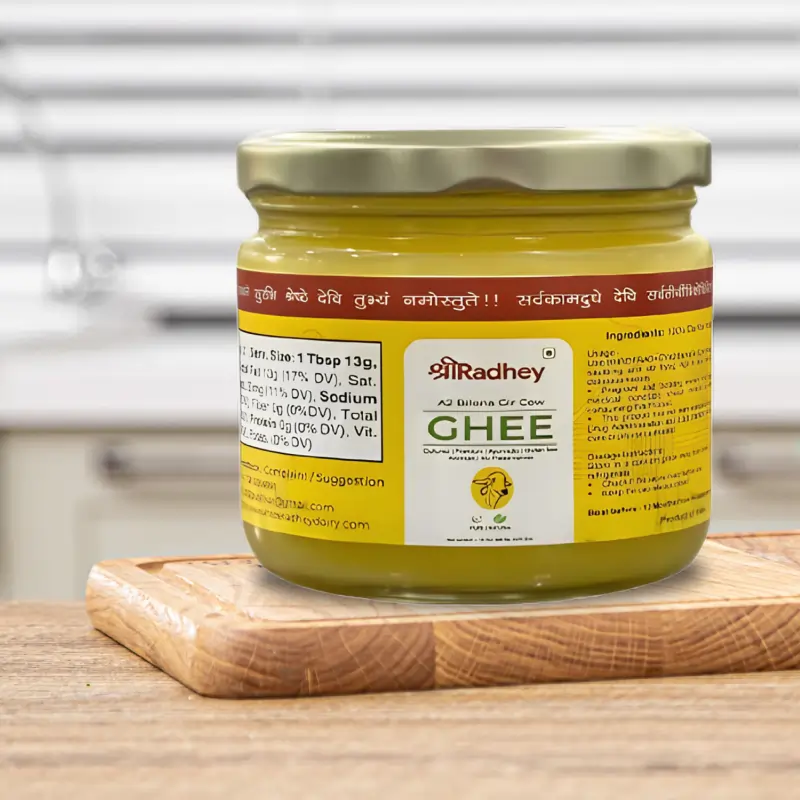 A2 Gir Cow Ghee (300 ML) |
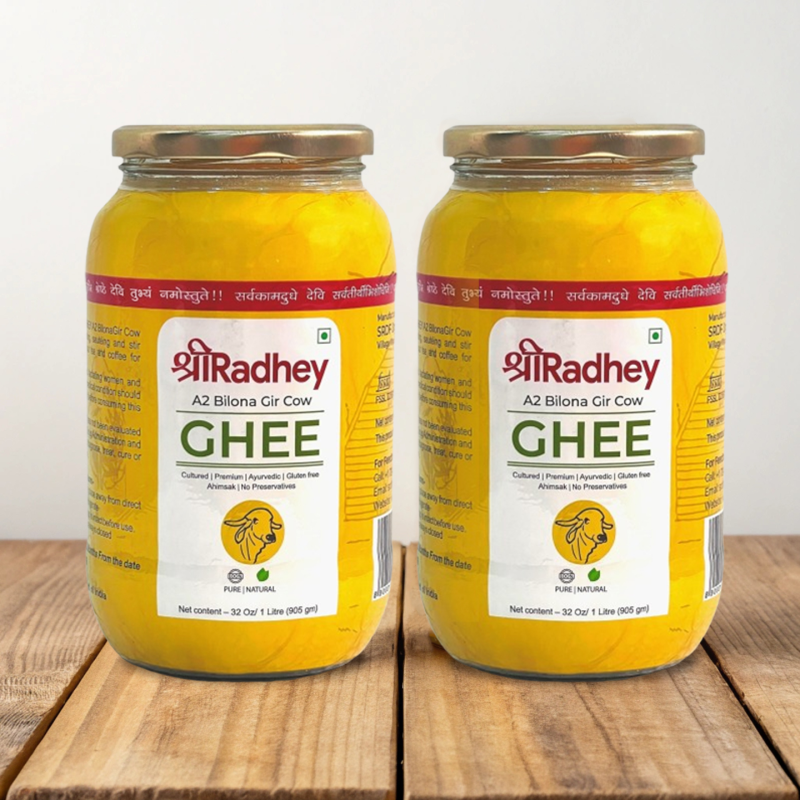 A2 Gir Cow Ghee (1000 ML X 2) |
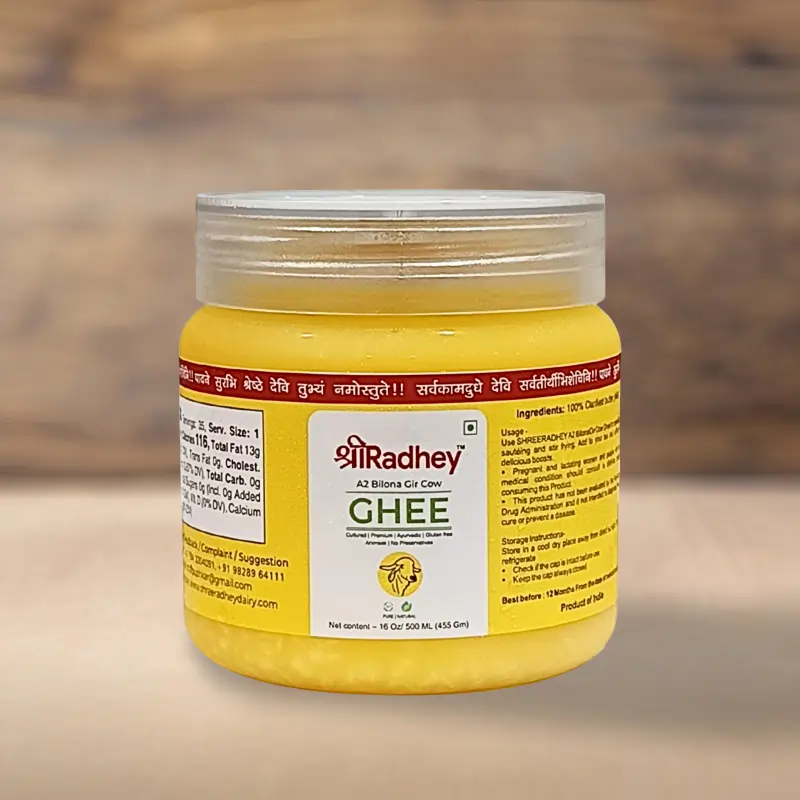 A2 Gir Cow Ghee (500 ML) |
Benefits of Desi Ghee in Reducing Cold and Cough
1. Natural Lubricant for the Throat
Cold and cough are known to have as their main symptoms dry and itchy throats. Ghee is also a natural lubricant, it coats the throat and immediately relieves the throat of irritation. Taking one teaspoon of warm ghee for cough with a pinch of black pepper, relieves sore throat.
2. Boosts Immunity
Ghee contains essential fatty acids and antioxidants which is one of the most important benefits of A2 ghee for immunity. When you have a better immunity, then your body will be prepared to deal with infections that lead to cold and respiratory problems.
3. Anti-inflammatory Properties
Ghee has a short-chain fatty acid called butyrate that is anti-inflammatory. It allows the easing out of congestion in the respiratory system, and breathing becomes easy when one has a cold.
4. Improves Digestion and Detoxification
A healthy gut closely relates to overall immunity. Ghee helps in digestion and influences the intake nutrients to be absorbed, which cleans the body on its own. This internal cleaning also hastens the process of recuperation when you have a cold and a cough.
Read: How Ghee Enhances Digestion and Gut Health
5. Supports Nasal Congestion Relief
The Nasya method used in Ayurveda includes a few drops of ghee being warmed up and administered in the nostrils. The practice aids the lubrication of nasal tracks, open up congested sinuses, and treatment of nasal blockage- a common symptom of common cold.
6. Soothes Chest Congestion
Ghee is combined with ginger or turmeric to form a potent remedy for chest congestion. The combination prevents the amount of mucus that accumulates and assists in clean lungs so as to breathe easily and sleep.
Myths and Facts About Eating Ghee During Cough
| Myth | Fact |
|---|---|
| Ghee always increases cough | Individual responses vary; there is no strong evidence that moderate consumption universally worsens cough. |
| Ghee cures cough | Ghee may provide temporary throat comfort but is not a cure for cough. |
| Ghee should never be eaten during a cold | Many people consume it in moderation as part of a balanced diet. |
| More ghee gives faster relief | Excessive intake is not recommended. |
How to Use Ghee for Cold and Cough
- Warm Ghee with Pepper: Mix 1 teaspoon of warm ghee with a pinch of black pepper and consume before bed.
- Ghee with Turmeric: Add a small spoon of turmeric to hot ghee and take it to fight inflammation.
- Nasya Method: Place 2–3 drops of warm desi ghee in each nostril in the morning on an empty stomach.
- Ghee with Warm Milk: Stir a spoonful of ghee with milk and drink it to soothe the throat and boost immunity.
Conclusion
Desi ghee has been used for generations as a natural home remedy during seasonal cold and cough. Whether mixed with black pepper, turmeric, ginger, or warm milk, it may help soothe throat irritation and provide comfort during seasonal discomfort. A2 bilona desi ghee, prepared using traditional methods, is often preferred for its purity and nutritional value.
Including pure A2 desi ghee in your daily routine may help support overall wellness, especially during changing seasons. For the best quality and authentic taste, choose traditionally prepared A2 Cow Ghee Bilona from Shree Radhey Dairy.
Frequently Asked Questions
Is ghee good for cough and cold?
Pure desi ghee has traditionally been used in Ayurveda to soothe throat discomfort and support overall wellness.
How to use ghee for cough?
Many people consume a small amount of desi ghee directly, mix it with warm milk, or include it in soft meals such as khichdi.
Is ghee good for dry cough?
Some people use warm desi ghee as a traditional home remedy because it may temporarily soothe an irritated throat.
How much ghee should I consume during a cough?
Small amounts, such as ½ to 1 teaspoon, are commonly used in traditional practices.
 What to Look for When Buying Organic A2 Cow Ghee
 How to Store Ghee Properly to Maintain Purity and Shelf Life
  How to Choose Ghee for Everyday Indian Cooking
 Is Desi Ghee the Missing Ingredient in Your Healthy Lifestyle?
 A2 Ghee for Digestive Health: Fact or Myth?